Kidney Disease: Avoiding High-Sodium Foods
Kidney Disease: Avoiding High-Sodium Foods
Sodium is a mineral that the body needs in small amounts. Sodium is found in table salt. Table salt is sodium chloride. Most people eat far more salt than they need. There are 2 main reasons for this. Salt is present in high amounts in most processed foods (pre-prepared foods like breakfast cereals, cookies, and pickles) and in all restaurant foods. In other words, if you are not cooking from fresh ingredients at home, you are very likely eating more salt than you need. When sodium intake is too high, it can increase thirst and cause the body to retain fluid. This can increase blood pressure and strain the kidneys. If you have chronic kidney disease, try not to eat the foods listed here, unless the label states that they are made without salt. People with chronic kidney disease should restrict their sodium intake to less than 1,500 mg of sodium (3,800 mg of table salt) each day.
Canned and processed foods, such as gravies, instant cereal, packaged noodles and potato mixes, olives, pickles, soups, vegetables
Cheeses, such as American, Blue, Parmesan, Roquefort
Cured meats, such as bacon, beef jerky, bologna, corned beef, ham, hot dogs, sandwich meats, sausages
Fast foods, such as burritos, fish sandwiches, milk shakes, salted French fries, tacos
Frozen foods, such as meat pies, TV dinners, waffles
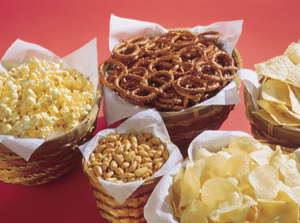
Salted snacks, such as chips, crackers, peanut popcorn, pretzels, and nuts
Other packaged items, such as antacids, baking soda, bouillon, catsup, lite salt, relish, salted butter and margarine, soy and teriyaki sauce, steak sauce, vegetable juices
Updated:
September 15, 2017
Reviewed By:
Latif, Walead, DO,Walton-Ziegler, Olivia, MS, PA-C